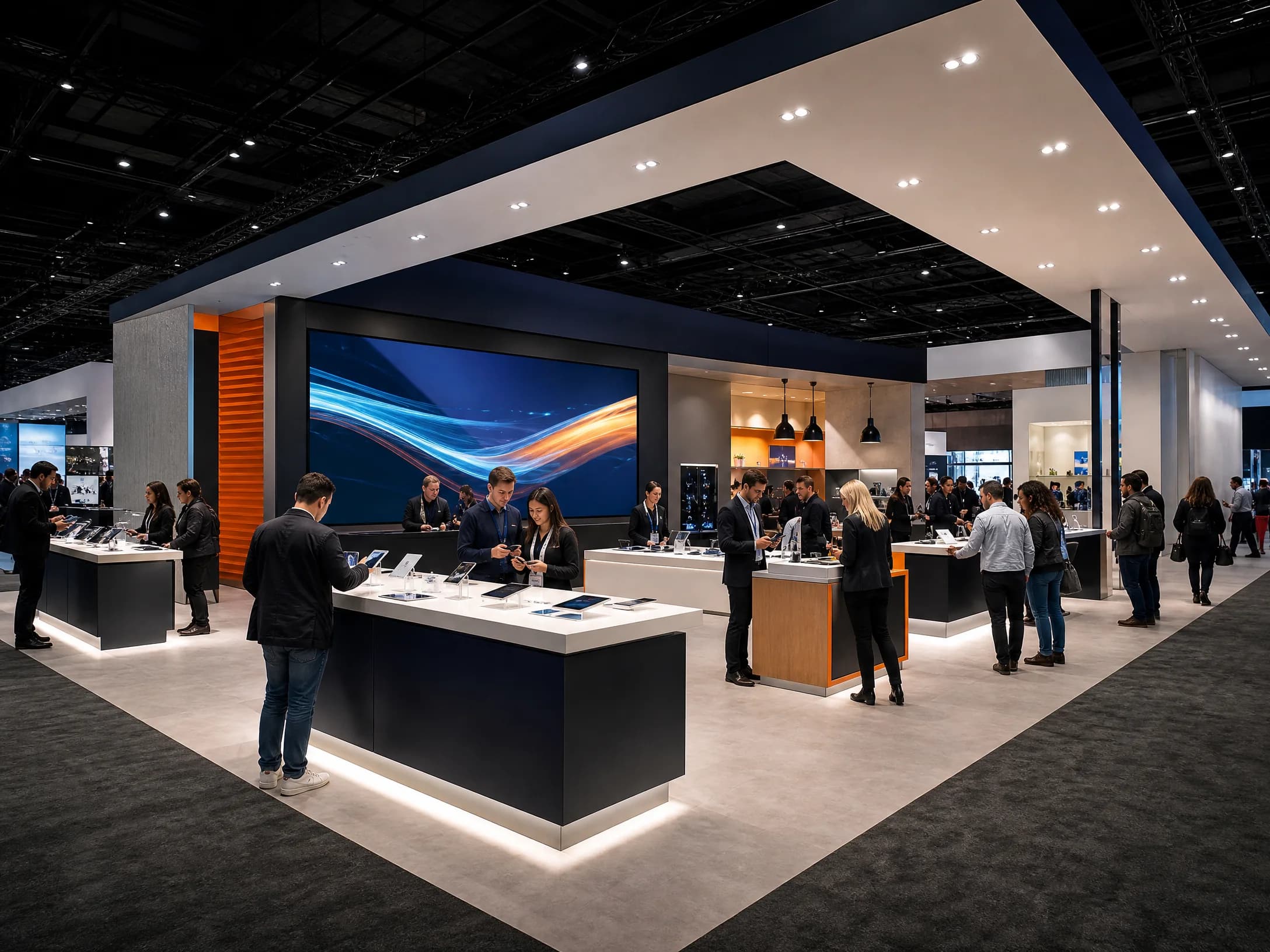
Consumer electronics
Demo-forward environments that manage power, connectivity, device security, visitor throughput, and rapid staff reset.
Review planning prioritiesIndependent trade show exhibit rental company. Not affiliated with, endorsed by, or sponsored by any trade show organizer or event owner.
Industry planning
Las Vegas booth rentals built for your sector — consumer electronics, digital health, mobility technology, fintech, media and broadcast, natural products and medical device manufacturing.
Three focused use cases
These pages avoid generic industry claims. They focus on exhibit-planning questions that affect layout, media, product handling, logistics, staffing, accessibility, and opening readiness.
Demo-forward environments that manage power, connectivity, device security, visitor throughput, and rapid staff reset.
Review planning priorities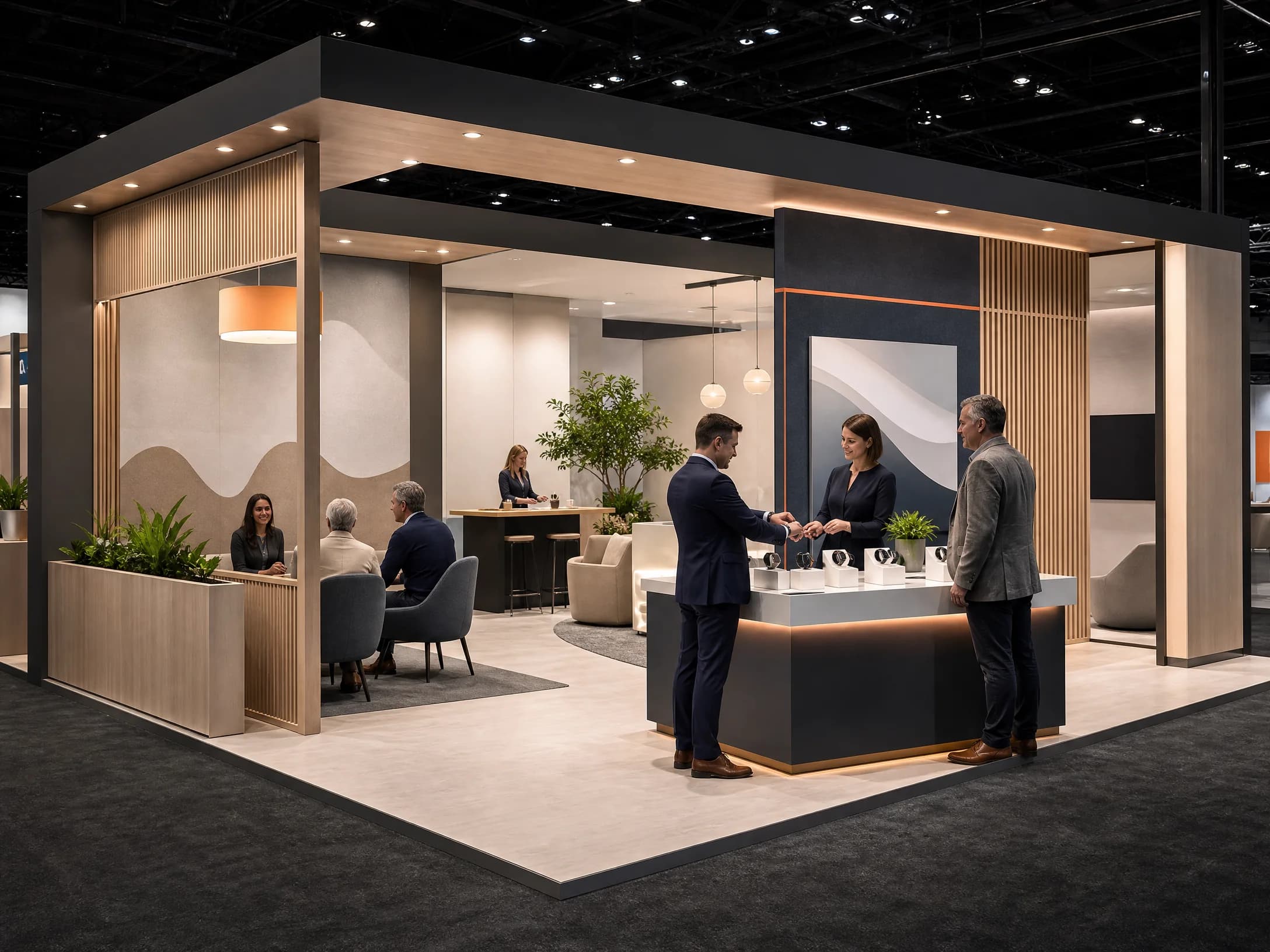
Credible spaces for education, consultation, product storytelling, and privacy-aware conversations without presenting regulatory advice.
Review planning priorities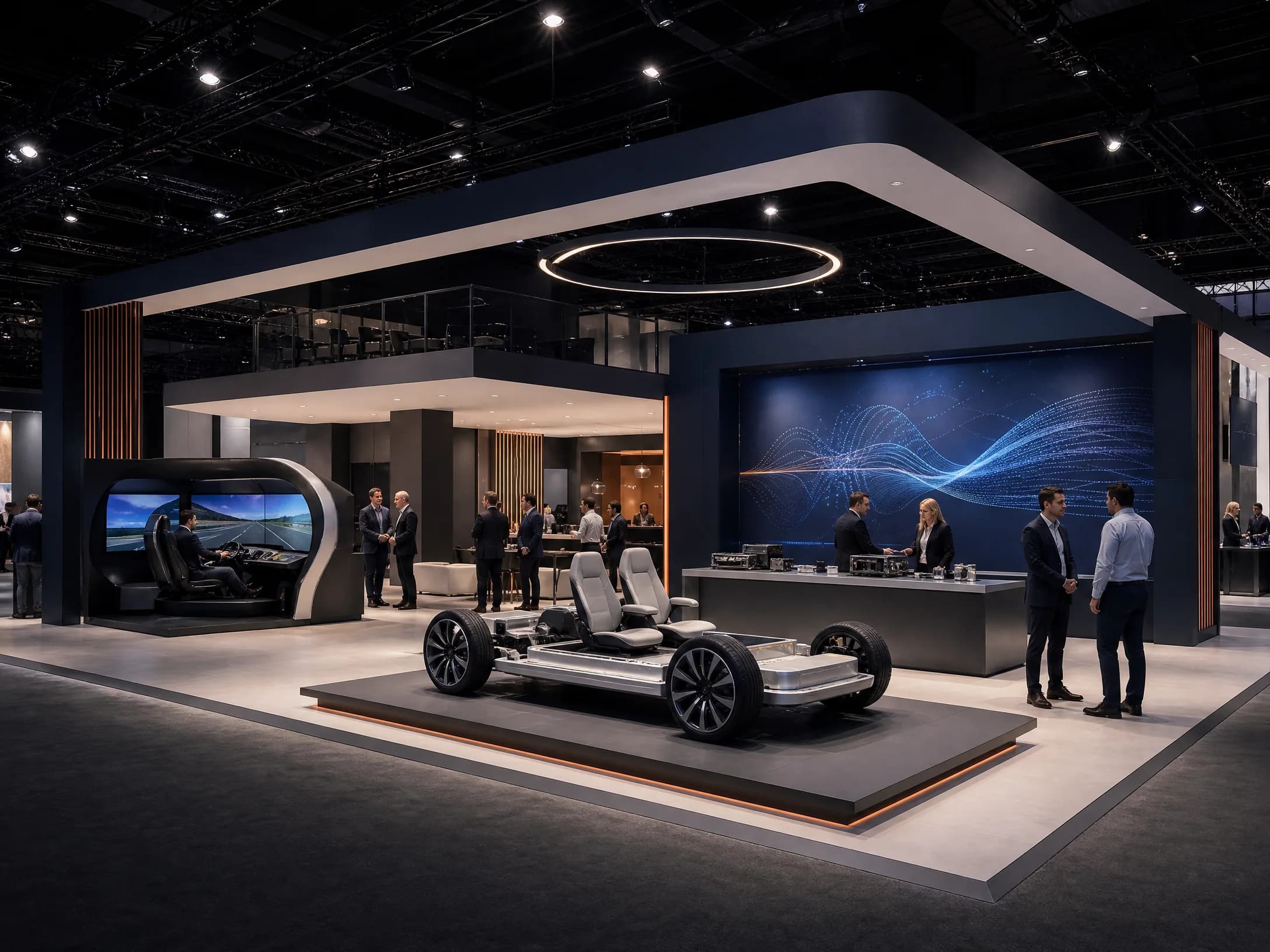
Large-format planning for vehicles, platforms, simulation, media moments, product demonstrations, and press traffic.
Review planning prioritiesConsumer electronics is the most visually saturated floor in the exhibition world. Every competitor has screens, every competitor has motion, and the result is that brightness alone buys you nothing. What wins on this floor is clarity — one message readable from across the hall, then progressively more detail as a visitor gets closer.
We build consumer electronics exhibits around a strong single statement carried at height, demo pods spaced so two or three simultaneous demonstrations do not crowd each other, presentation areas with genuine seating for scheduled sessions, and semi-private space for the conversations that actually convert into business.
The practical engineering matters as much as the design. Power distribution has to be planned for every device rather than added on the floor. Cable management has to be designed in, or it becomes a trip hazard and a visual mess. Charging infrastructure for demo hardware needs to exist. Network provisioning must be ordered in advance, because show-floor internet is expensive and slow to arrange late.
Digital health exhibitors sit at the intersection of technology and clinical credibility, and the booth has to carry both. The audience is a mix of clinicians, health system buyers, payers and investors, and each of those conversations has a different length and a different privacy requirement.
We design digital health exhibits with layered space — open demonstration at the aisle for platform walkthroughs, semi-private areas for clinical discussion, and genuinely private rooms for commercial conversations that cannot happen in the open. Demonstration surfaces need to be at a working height where a clinician can actually interact rather than watch.
Regulatory and claims language varies by product and requires a defined home in the graphic hierarchy rather than being squeezed in at the last minute. We plan for it in the layout.
Mobility exhibitors frequently bring physical hardware — vehicles, subsystems, sensor arrays, charging equipment — and that hardware drives every other decision. Weight and point loading on the exhibit floor, clearance around anything that moves, power draw, and access for move-in all have to be engineered before the booth is built.
We design mobility exhibits with reinforced flooring and structural planning where heavy components sit, vehicle display platforms where a car or subsystem needs to be elevated and seen from all sides, clear operating envelopes around demonstrable equipment, and high-clearance freight access planned so hardware arrives after the structure is standing.
Rigging for identification at height is common in this sector because mobility halls are large and a ground-level booth surrounded by vehicles loses its own name.
Medical device exhibitors are selling to engineers, procurement teams and clinical evaluators, and the conversations are long, technical and detail-driven. The booth is a working environment more than a display.
We build these exhibits with product demonstration surfaces at a height where a device can be handled properly, clean clinical finishes that reinforce quality, private and semi-private meeting space for evaluation discussions, and substantial storage because medical exhibitors carry literature, samples and demo units in volume.
Sightlines matter in a specific way here: a device evaluation is a focused activity and the booth needs to provide places where that focus is possible on a loud floor.
Plan the next step
Use the structured request to describe the show, footprint, services, design direction, goals, success measures, files, budget range, timeline, and preferred follow-up.